
Solar PV Panels
If you are looking for ways to lower your energy bills and make your home more self-sufficient, installing solar panels is one of the most impactful upgrades you can make. By generating your own clean electricity directly from your roof, you significantly reduce your reliance on the grid and lock in free energy for decades to come.
The Problem: Rising Grid Costs and Wasted Roof Space
Every day, daylight hits your roof, but without solar panels, that free energy goes completely to waste. Meanwhile, relying solely on the grid means you are entirely vulnerable to fluctuating electricity prices.
This setup creates two major challenges for homeowners:
High electricity bills that eat into your monthly budget, especially if you power high-draw appliances or an electric vehicle (EV).
A higher carbon footprint because a significant portion of grid electricity still relies on burning fossil fuels.
Installing a solar photovoltaic (PV) system turns an unused part of your house into a personal power station.
What Solar PV Does
Solar Photovoltaic (PV) systems capture light energy from the sun and convert it into usable electricity. The panels are made up of layers of semiconducting material (usually silicon). When light shines on the cells, it creates an electric field, producing direct current (DC) electricity.
Because your household appliances run on alternating current (AC), the system includes a crucial component called an inverter. The inverter converts the DC electricity into AC, seamlessly feeding it directly into your home's consumer unit (fuse box).
Whenever the sun is up, your home will automatically use the free solar electricity first. If you need more power than the panels are generating, the system instantly draws the remainder from the grid without any interruption.
The Added Benefit: Battery Storage
While solar panels are fantastic during the day, standard systems cannot store power for later. If you are out at work when the sun is shining, your excess electricity is automatically sent back to the national grid.
Adding a solar battery storage system changes the game. Instead of exporting your excess daytime energy, it is stored in a battery pack. You can then use that stored green electricity in the evening to power your lights, TV, and appliances, drastically maximizing your self-consumption.
Solar Panels Only: Typical cost: £6,000–£9,000. Reduces grid reliance by roughly 30-40%.
Solar Panels + Battery Storage: Typical cost: £9,500–£14,000. Reduces grid reliance by up to 70-80%.
What About the Smart Export Guarantee (SEG)?
You don't just save money by not buying grid electricity; you can also get paid for what you don't use. Under the UK Government's Smart Export Guarantee (SEG) scheme, energy suppliers are legally required to pay you for every unit of renewable electricity you export back to the grid.
By shopping around for the best SEG tariff, you can create a steady stream of passive income from your surplus summer generation, helping the system pay for itself even faster.
Is Solar PV Right for Your Home?
Solar PV is highly effective for most UK properties, but it is particularly well-suited to:
Roofs that face South, East, or West with little to no shading from trees or nearby buildings.
Households with high daytime electricity usage (e.g., people working from home).
Homeowners planning to adopt eco-technologies like air source heat pumps or electric vehicles.
Any property looking to hedge against future energy price spikes.
What To Expect from Installation
An average residential solar installation is surprisingly quick, usually taking just 1 to 2 days.
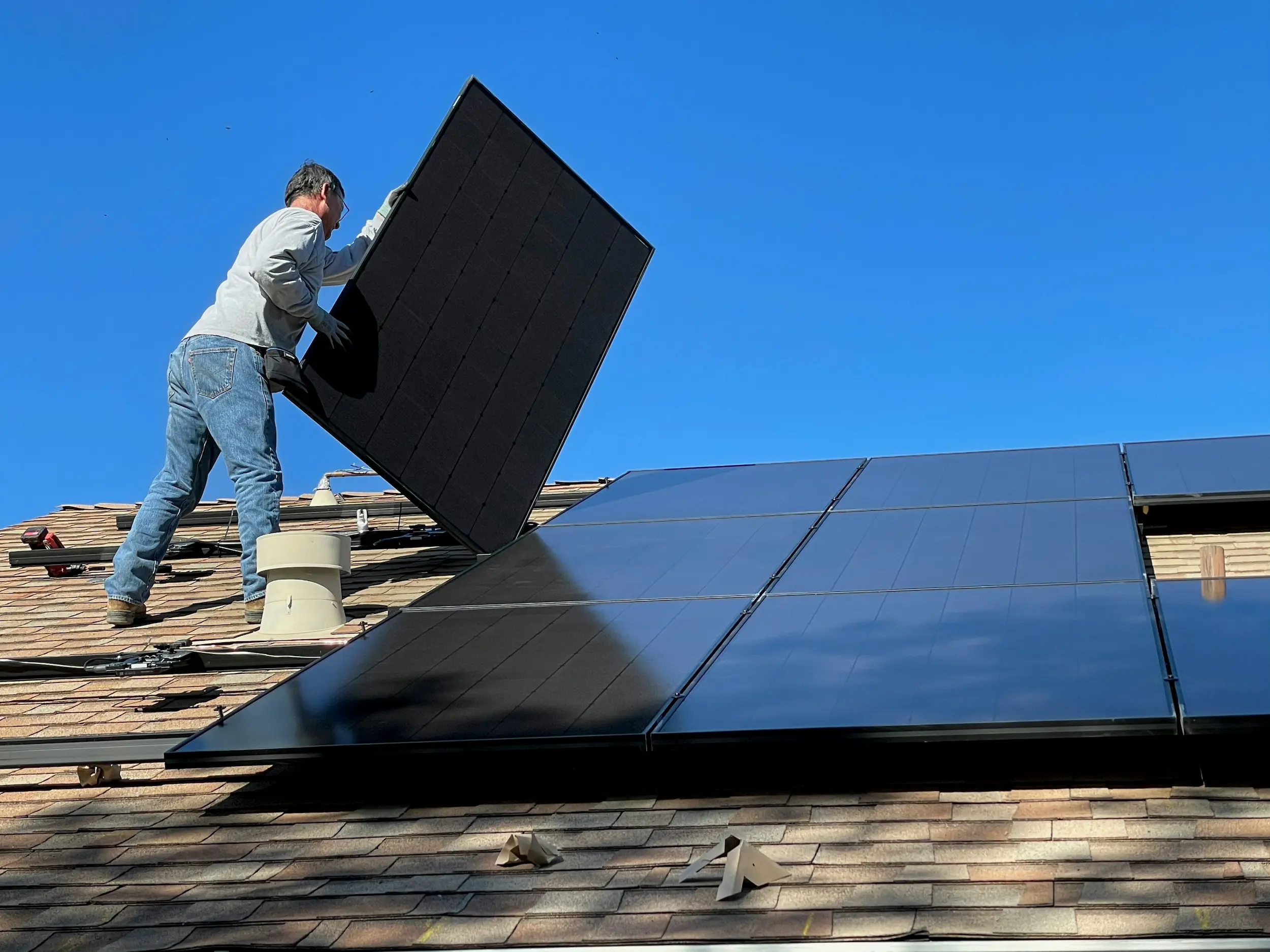
Scaffolding is erected first to ensure the installers can work safely. Roof hooks are secured to your rafter timbers, mounting rails are attached, and the panels are clamped into place. Wire arrays are then routed down into your loft or utility space where the inverter (and optional battery) is positioned.
To ensure a smooth process, always use an installer certified under the Microgeneration Certification Scheme (MCS). This certification guarantees high installation standards and is mandatory if you want to apply for SEG export payments later.
Key Takeaway
Your roof is prime real estate for energy generation. Upgrading to solar PV protects your pocket from grid price spikes, dramatically cuts your carbon footprint, and turns your home into a modern, energy-independent powerhouse.