

Insulated Suspended Floor
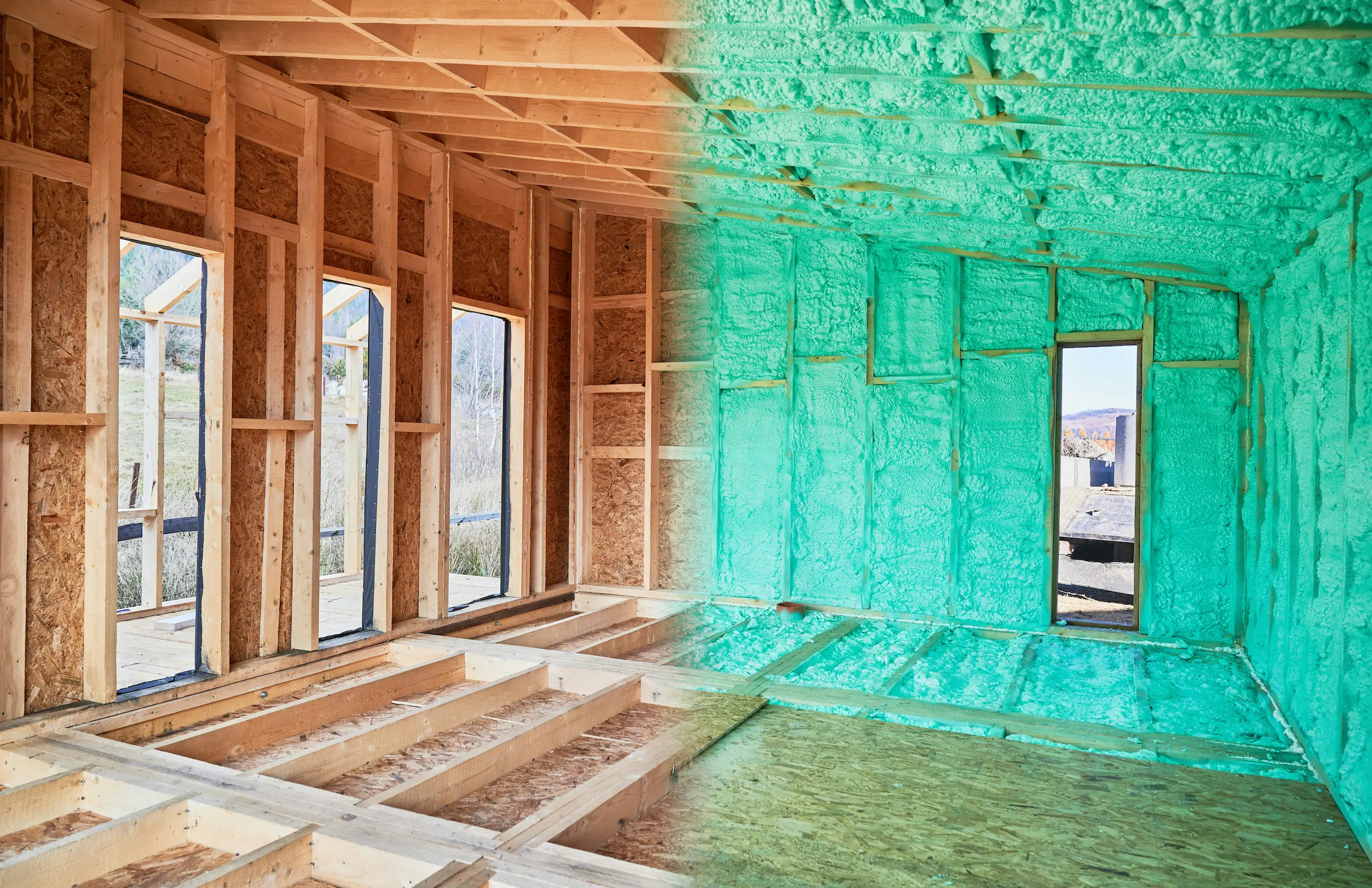
If your home has ground-floor rooms with wooden floorboards, you likely have suspended timber floors. While these floors give older houses character, they are a major source of heat loss. Insulating beneath the floorboards is one of the most effective retrofits you can make, permanently eliminating freezing floors and cold, biting draughts at ankle level.
The Problem: The Freezing Void Underneath
Suspended timber floors feature wooden floorboards nailed over support joists, leaving a hollow void underneath. To stop the timber from rotting, this void is intentionally ventilated using air bricks in the outside walls.
While that airflow is vital for the health of the wood, it means a pool of freezing winter air is constantly sitting directly beneath your living spaces. In an uninsulated home, around 10-15% of household heat is lost straight through the floor.
Worse still, because older floorboards shrink over time, this freezing air is sucked up through the gaps between the boards by the natural stack effect (warm air rising and drawing cold air in from below). This leaves rooms feeling incredibly draughty, forcing you to turn your heating up just to stay comfortable.
What Suspended Floor Insulation Does
Suspended floor insulation places a thick thermal barrier between your warm room and the freezing sub-floor void.
Mineral wool or flexible wood-fibre insulation is cut and friction-fitted tightly between the timber joists. Crucially, the insulation must be supported from below using a breathable membrane or netting so it doesn't drop into the void over time.
Once installed, a dedicated airtightness membrane is laid over the top of the joists before the floorboards are put back down. This completely blocks the icy draughts rising through the floorboard gaps while allowing the insulation to stay bone-dry and effective. The air bricks below continue to ventilate the void safely, but the cold air can no longer bypass your floor.
Two Main Installation Methods
Lifting the Floorboards – The traditional approach. Floorboards are carefully pried up, insulation is installed from above between the joists, and the boards are renailed down. This is ideal if you are already planning to replace carpets or sand down original floorboards. Typical cost: £1,500–£3,500 depending on room size and flooring.
Under-floor Robot (Crawl Space) – A modern, non-disruptive technique. If your sub-floor void is deep enough, a specialized remote-controlled robot can be inserted through an air brick. It crawls under your home and sprays a high-performance, breathable insulation foam directly onto the underside of the floorboards. Typical cost: £2,500–£4,500.
What About Solid Concrete Floors?
If your ground floor is solid concrete rather than timber, it cannot be insulated this way. Insulating a solid floor requires laying rigid insulation boards directly on top of the concrete, followed by a new floating floor.
Because this raises the floor level by around 50mm to 100mm (requiring doors and skirting boards to be trimmed), it is a much more invasive project. For homes with a mix of floors, suspended timber sections are always the easier, more cost-effective win.
Is Suspended Floor Insulation Right for Your Home?
You should look into suspended floor insulation if you experience:
Ground-floor rooms that feel uncomfortably cold at foot level, even when the heating is blasting.
Visible gaps between your floorboards where you can feel a distinct draught blowing through.
High energy bills and a house that cools down rapidly the moment your radiators turn off.
Carpets that feel noticeably cold or damp to the touch in winter.
What to Expect from Installation
If you opt for the traditional method, expect a few days of disruption per room. Furniture must be completely cleared, and existing carpets or underlay rolled back. Installers will carefully number original floorboards as they lift them to ensure they go back in the exact same spot.
It is vital that installers never block the external air bricks during the process—the void below must remain ventilated to prevent moisture build-up and dry rot in the joists.
Key Takeaway
Walking on an uninsulated suspended floor is like standing on a block of ice. Suspending a thermal blanket beneath your floorboards stops heat loss in its tracks, shuts down uncomfortable drafts, and makes your home feel instantly warmer from the ground up.