
Solar Water Heating
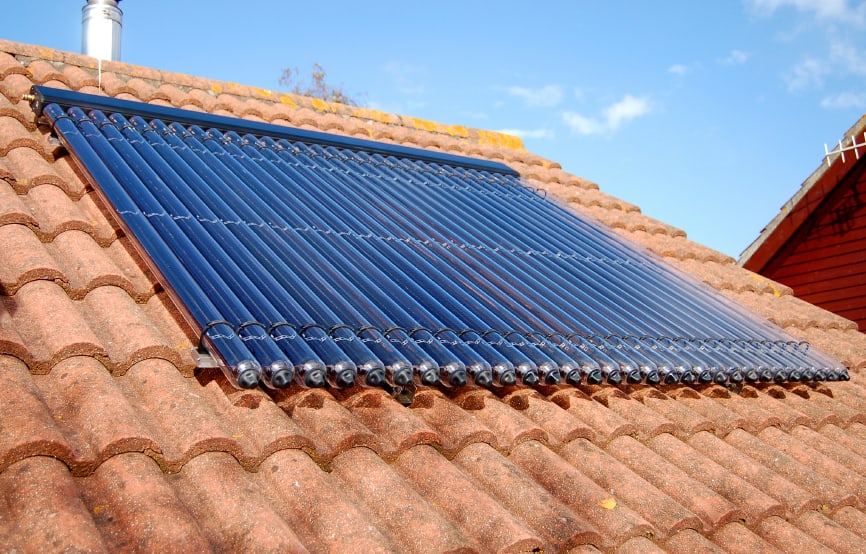
If your EPC has recommended solar water heating, it's one of the most straightforward renewable technologies available for existing homes. It doesn't generate electricity — it generates heat, specifically for your domestic hot water. Here's what it involves and whether it's right for you.
How It Works
Solar thermal collectors are mounted on your roof and absorb heat from the sun — even on overcast days, though output is higher in direct sunlight. That heat is transferred via a fluid circuit to your hot water cylinder, pre-warming the water before your boiler or immersion heater finishes the job.
The result: your boiler works less hard, runs for shorter periods, and uses less fuel. During summer months, solar thermal can meet the majority of your hot water demand entirely. In winter, it provides a useful pre-heat contribution rather than full coverage.
What Your Roof Needs
The ideal setup is a south-facing roof slope with minimal shading from chimneys, trees, or neighbouring buildings. South-east or south-west orientations still work reasonably well. A north-facing roof is not suitable.
Collectors come in two main types:
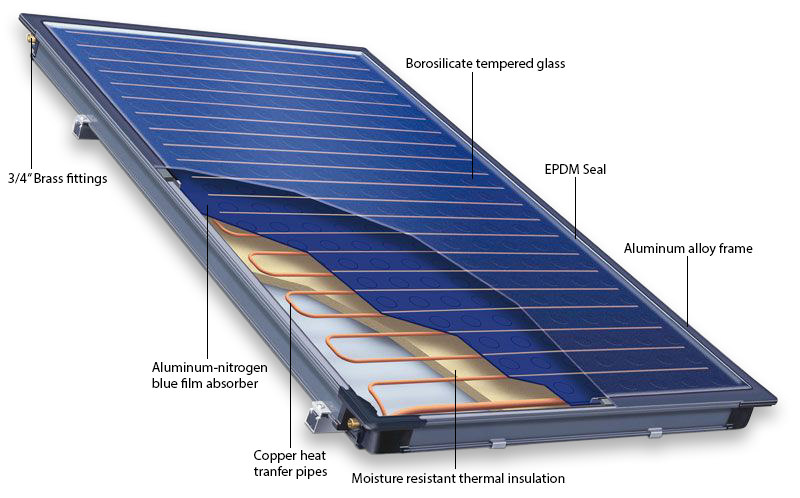
Flat plate collectors — Simpler, more robust, and generally lower cost. A good choice for most domestic installations.
Evacuated tube collectors — More efficient, particularly in lower light conditions, and better suited to roofs that aren't perfectly south-facing. Slightly higher cost but can outperform flat plate in the UK climate.

Your installer will advise which is more appropriate based on your roof orientation, shading, and hot water demand.
The Cylinder Requirement
This is the most important practical consideration. Solar thermal requires a twin-coil hot water cylinder — one coil connects to the solar circuit, the other to your boiler. If you don't already have one, fitting a new cylinder is part of the installation.
If you currently have a combi boiler, you don't have a hot water cylinder at all — your boiler heats water on demand. Adding solar thermal means moving away from that system entirely, which is a more significant change and adds to the overall cost and complexity of the project. It's worth factoring this in when assessing viability.

If You're Also Planning a Heat Pump
Air source heat pumps (ASHPs) already heat water very efficiently and also require a hot water cylinder. If an ASHP is on your retrofit roadmap, it may well cover your hot water needs adequately on its own — making solar thermal an unnecessary addition rather than a complementary one.
This is worth discussing with your assessor before committing, particularly if budget is a consideration. The two technologies aren't incompatible, but the case for solar thermal is weaker when a heat pump is already doing the heavy lifting.
Costs and Certification
Typical installed cost is £4,000–£6,000, which includes collectors, cylinder (if required), pipework, and commissioning. If your existing cylinder needs replacing as part of the work, this is usually included within that range.
Solar thermal installers must be MCS-certified (Microgeneration Certification Scheme). This is a requirement for any grant or incentive scheme, and also a good baseline indicator of installer quality. Always ask for MCS certification before proceeding.
Running and Maintenance
Solar thermal systems are largely low-maintenance once installed. The heat transfer fluid in the collector circuit will need checking periodically (typically every 5–10 years) and replacing if degraded. A reputable installer will advise on a maintenance schedule at commissioning.
There are no moving parts in the collectors themselves, and modern systems include automatic overheat protection for periods of high solar gain and low demand (such as when you're on holiday in summer).
Key Takeaway
Solar water heating is a mature, reliable technology that directly reduces the energy your home uses to heat water. It's most cost-effective in homes that already have — or need to replace — a hot water cylinder, and where the roof orientation is favourable. If recommended on your EPC, it's worth taking seriously as part of a wider retrofit plan.