

Battery Storage for Solar PV

If you have solar panels, you're probably already saving money on your energy bills. But without a battery, a significant portion of what your panels generate is exported to the grid — often at a rate far lower than what you pay to import electricity. Battery storage changes that equation.
The Problem with Solar PV Alone
Solar panels generate electricity when the sun is out — broadly speaking, during the middle of the day. But that's often not when your household demand is highest. Most homes use more power in the mornings and evenings: kettles, cooking, lighting, TVs, showers.
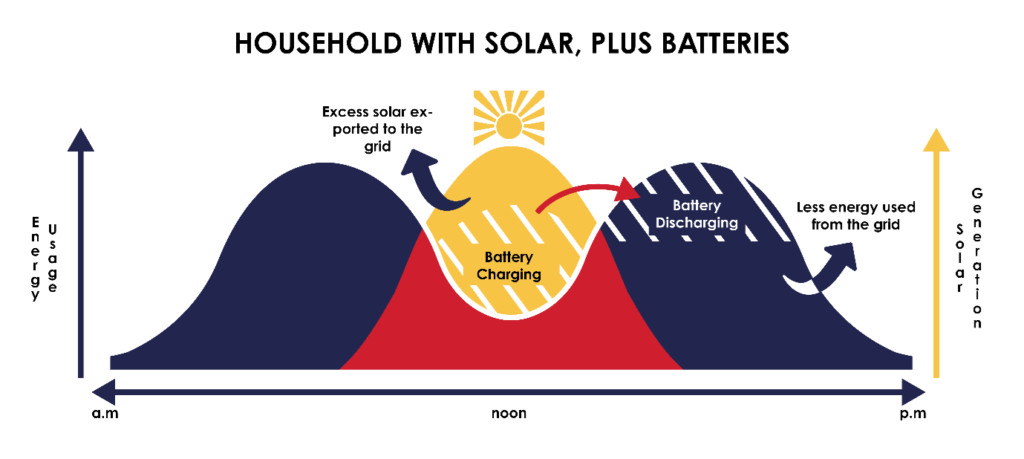
Without storage, surplus generation during the day is exported automatically. The export rate you receive (typically 4–15p per unit depending on your tariff) is considerably less than the import rate you'd pay to buy that same electricity back in the evening (currently 24–30p per unit on most tariffs). You're effectively selling cheap and buying back expensive.
A battery stores that surplus and makes it available when you actually need it.
What the Numbers Look Like
A typical home solar PV system without a battery self-consumes around 30–40% of what it generates — the rest is exported. Add a battery, and that figure typically rises to 60–80%, depending on household size, usage patterns, and battery capacity.
In practical terms, for a home generating 3,500–4,000 kWh per year from solar, that improvement in self-consumption can represent a meaningful reduction in grid imports — and a correspondingly lower electricity bill.
Time-of-Use Tariffs: Where It Gets More Interesting
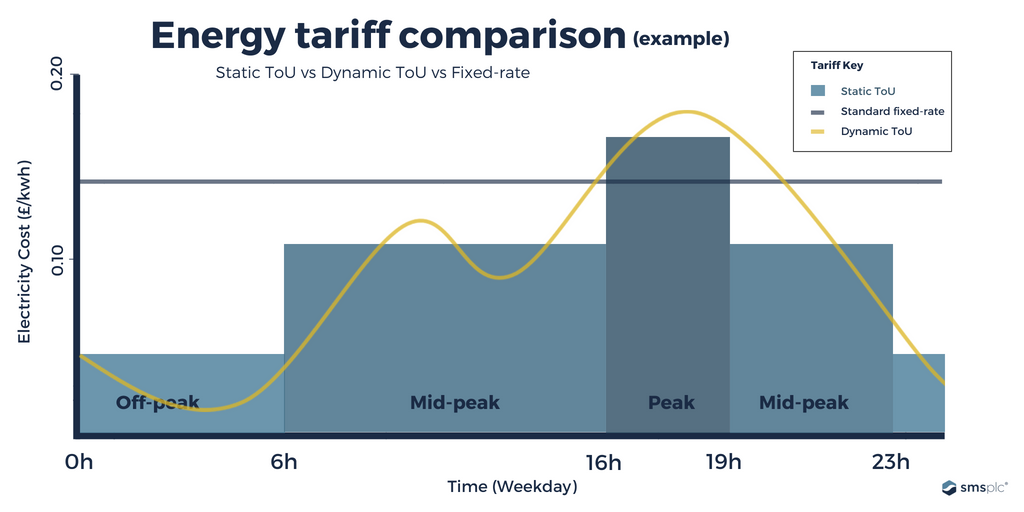
Battery storage becomes significantly more valuable when combined with a time-of-use tariff such as Octopus Go or Intelligent Octopus. These tariffs offer very cheap electricity during off-peak periods — typically overnight — sometimes as low as 7–9p per unit.
With the right setup, your battery can be programmed to charge from the grid during cheap overnight hours, top up further from solar during the day, and power your home through the expensive peak evening period. This approach, often called smart charging, can substantially cut your effective electricity cost even on days with little solar generation.
It does require a compatible inverter and battery system that can integrate with tariff scheduling — worth confirming with your installer upfront.
Inverter Compatibility — Check This First
Not all solar inverters are compatible with all battery systems. If you have an existing solar PV installation, the inverter — the box that converts DC power from your panels into usable AC electricity — may need to be replaced or supplemented to accommodate battery storage.
There are two main configurations:
AC-coupled batteries — Connect to your existing system on the AC side. More flexible and often easier to retrofit, but involves some conversion losses.
DC-coupled batteries — Connect directly into the solar circuit before the inverter. More efficient but requires a compatible hybrid inverter, which may mean replacing your existing one.
Your installer will assess your current setup and advise which approach is appropriate. Factor in potential inverter replacement costs when budgeting.
Costs and VAT
Typical installed cost is £4,000–£8,000, depending on battery capacity (measured in kilowatt-hours, kWh) and whether inverter work is needed. Common domestic battery capacities range from 5–15 kWh — a 10 kWh battery is a reasonable starting point for most households.
Importantly, battery storage currently attracts 0% VAT when installed alongside an existing solar PV system. This represents a meaningful saving compared to the standard 20% rate — but the rules around eligibility can change, so confirm current HMRC guidance with your installer at the time of purchase.
What to Expect from Installation
Installation is typically completed in a day. The battery unit is wall-mounted, usually in a garage, utility room, or alongside your existing inverter. Cabling runs between the battery, inverter, and consumer unit. Most modern systems include an app or web portal showing real-time generation, consumption, battery state, and export data.
No structural work is required and disruption is minimal.
Key Takeaway
Battery storage is one of the most logical next steps for any home that already has solar PV. It doesn't generate additional energy — but it significantly increases the value of the energy you're already generating. Paired with a smart tariff, the economics are increasingly compelling.