
Air Source Heat Pumps

If your assessment has recommended an air source heat pump, it's because it represents the most impactful change available for most UK homes. It's not a small upgrade — it replaces your entire heating system — but it's increasingly mainstream, well-supported by government incentives, and the direction of travel for domestic heating in the UK.
How It Works
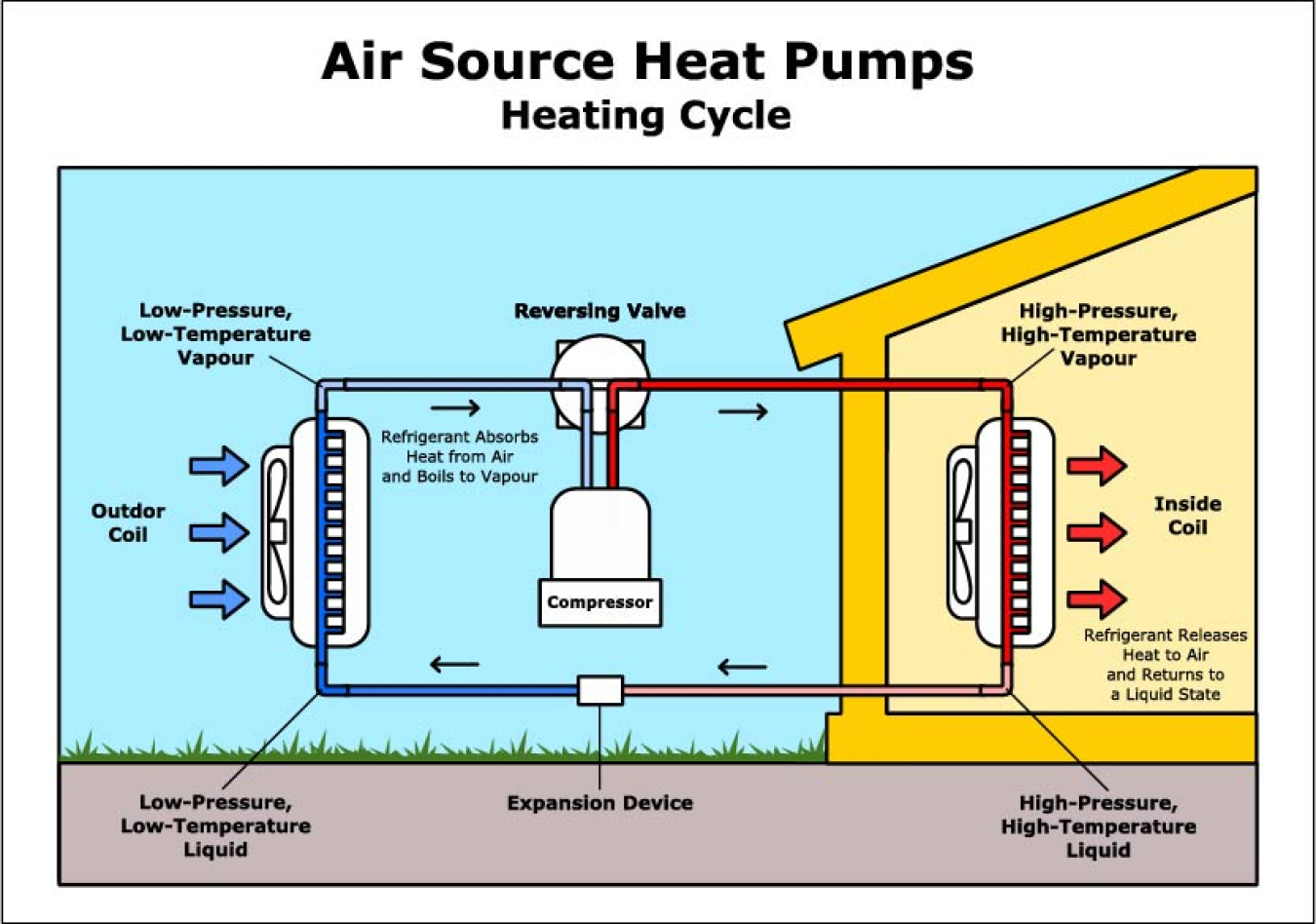
An air source heat pump (ASHP) extracts heat from outdoor air and uses it to heat your home and hot water. This works even when outdoor temperatures are well below freezing — modern units operate effectively down to -20°C.
The key metric is the coefficient of performance (CoP). For every 1 unit of electricity a heat pump consumes, it typically produces 3–4 units of heat. A gas boiler, by contrast, converts roughly 0.9 units of heat for every unit of energy input. Heat pumps are fundamentally more efficient — and as the electricity grid becomes greener, their carbon advantage grows further.
How It Differs From a Gas Boiler
The most important practical difference is temperature. A gas boiler heats water to 70–80°C and blasts it around your radiators in short, intense bursts. A heat pump works best running at lower flow temperatures — typically 35–45°C — for longer, steadier periods.
This means:
Your heating may run for more hours per day, but at lower intensity
Your home should feel consistently warm rather than cycling between hot and cool
Your radiators and system need to be capable of delivering heat effectively at those lower temperatures
In a well-insulated home, this works very well. In a poorly insulated home, it can be less effective — which is why insulation and heat pump upgrades are best planned together.
Radiator Assessment — Don't Skip This
Because heat pumps operate at lower flow temperatures, your existing radiators may not be large enough to heat each room adequately. A competent installer will carry out a room-by-room heat loss calculation and assess whether your current radiators can deliver sufficient output at 45°C or below.
In many cases, existing radiators are fine — particularly if your home has had insulation improvements. In others, some radiators will need upsizing. This should be scoped and costed as part of the installation quote, not discovered afterwards.
Underfloor heating is naturally well-suited to heat pump operation and, if present, rarely requires modification.
The Hot Water Cylinder Requirement
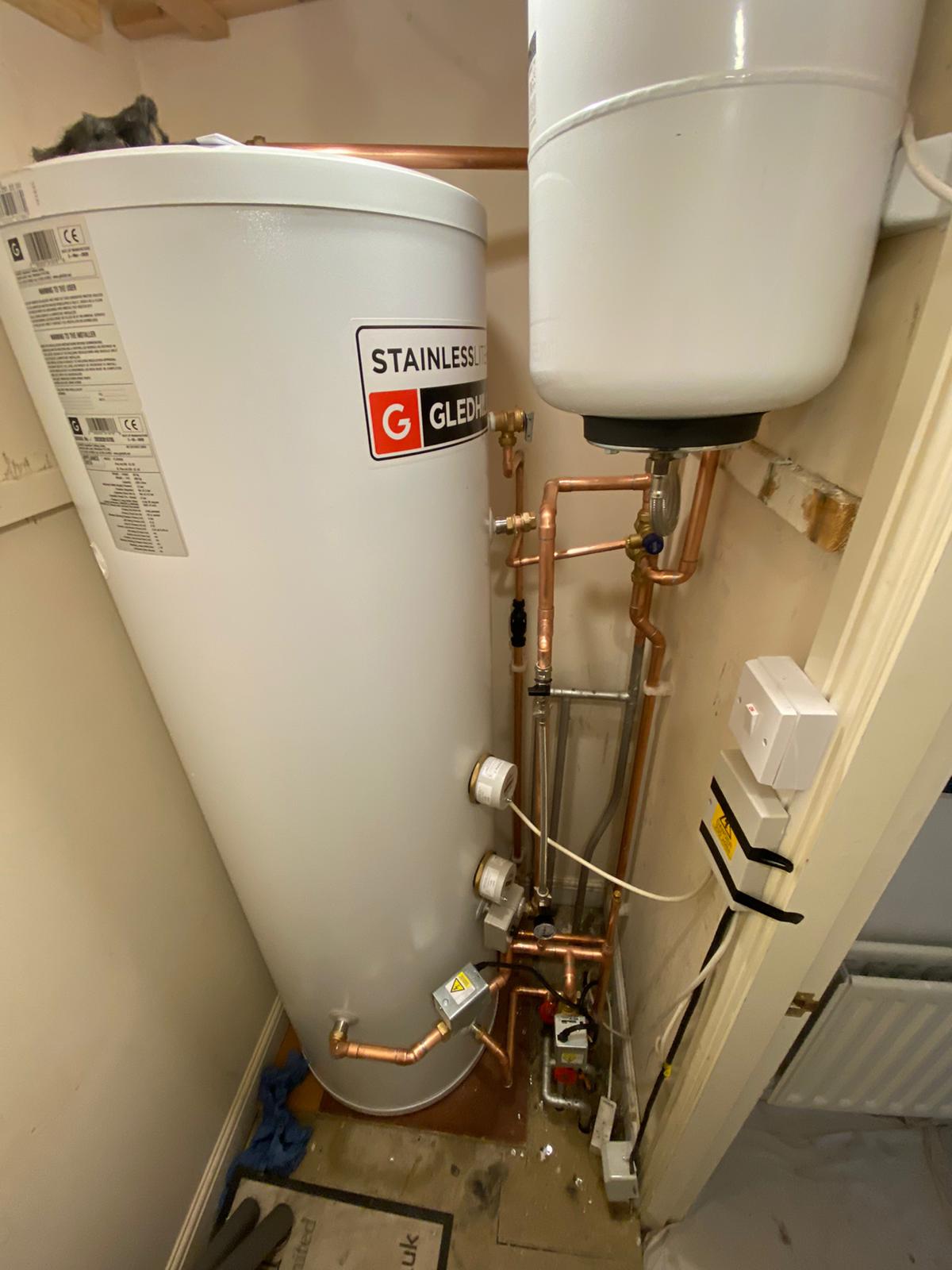
Unlike a combi boiler, an ASHP does not heat water on demand. It requires a hot water cylinder — typically 150–200 litres — to store hot water ready for use. If you don't currently have one, finding space for it is one of the first practical questions to resolve.
Airing cupboards, utility rooms, and garages are common locations. In some properties this is straightforward; in others — particularly flats or smaller terraced houses — it requires more creative planning. Identify the space early; it's a project stopper if left too late.
The Boiler Upgrade Scheme
The government's Boiler Upgrade Scheme (BUS) currently provides a £7,500 grant towards the cost of an ASHP installation. This is paid directly to your MCS-certified installer and deducted from your invoice — you don't handle the money.
Eligibility is relatively straightforward for most homes, but grants are subject to availability and the scheme's continuation beyond its current funding period is not guaranteed. Check current availability at gov.uk/boiler-upgrade-scheme and factor this into your timeline.
Costs
Typical installed cost before grant is £8,000–£15,000, depending on the size of the unit required (measured in kilowatts), whether radiator upgrades are needed, cylinder installation, and the complexity of the installation. After the £7,500 BUS grant, many straightforward installations fall in the £1,000–£6,000 net cost range.
Running costs depend heavily on your electricity tariff. Heat pumps pair well with time-of-use tariffs, and if you have solar PV, self-consumed generation can offset a meaningful proportion of running costs.
Installer Requirements
Your installer must be both MCS-certified and TrustMark-registered — both are required to access the BUS grant, and both are markers of quality and accountability. Always verify certification before signing a contract. The MCS installer database is searchable at mcscertified.com.
Get at least two or three quotes. Heat pump sizing and system design vary between installers, and the cheapest quote is not always the most appropriate — pay attention to whether a full heat loss survey and radiator assessment is included.
Is Your Home Ready?
Heat pumps work best in homes that are reasonably well insulated. That doesn't mean your home needs to be perfect — the majority of UK properties are suitable — but significant gaps in insulation (particularly loft and walls) are worth addressing first or alongside the heat pump installation. Your retrofit assessor can advise on sequencing.
Key Takeaway
An air source heat pump is the single most impactful step most homes can take to reduce carbon emissions and move away from fossil fuel heating. With the £7,500 BUS grant available and installation costs continuing to fall, the financial case is stronger than it has ever been. Planning matters — space for a cylinder, radiator sizing, and insulation levels all need consideration — but none of these are insurmountable.